
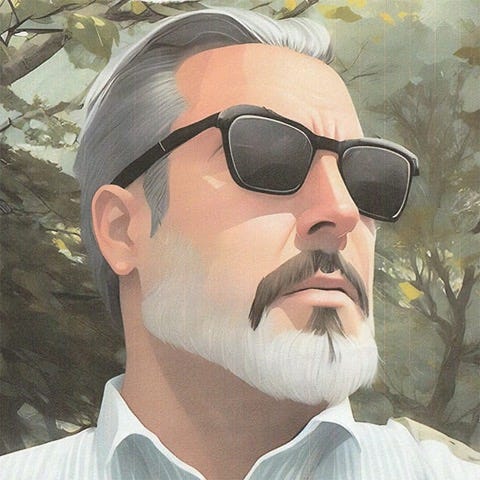
Meet Joe Tankersley
author of Gabby's First Kiss and The Practopia Project.

How did you get started writing?
I really fell into it by always picking the easier option. In college, I majored in English because I figured reading novels would be easier than science or math.
My first real job was working at a film and video production company. Writing scripts was easier than schlepping equipment in the Florida heat, so I volunteered to be the writer. That led to a brief career writing scripts for bad B movies. Ultimately, I stumbled into a job writing for Walt Disney Imagineering. That lasted for two decades. By then, I guess I was a writer pretty much by default.
You call yourself a Futurist Storyteller. What is that all about?
One of the most important lessons I learned at Disney was the power of story. Before Walt Disney opened the theme parks, he was making films that had a major influence on shaping the public’s ideas about the future. That 1950s techno-optimism that Disney loved helped create the world we’re still living in today.
Realizing that power sparked my interest in how we could use story to shape a different kind of future. At about the same time, I discovered there were people who actually thought about these things professionally- they called themselves futurists.
I started hanging out with futurists while writing stories for Disney on everything from classic fairytales to stories set in Tomorrowland. The futurists I met had the tools to think strategically about the future, but they lacked the storytelling skills. It was a natural fit for me to try to bridge that gap.
What attracted you to thrutopia?
Not really sure where I first discovered Manda Scott’s announcement for the Thrtuopia masterclass, but I knew immediately it was something I had to do. By then I had left Disney and was using the tools of story and foresight to help clients Imagineer better tomorrows. So, I was always on the lookout for any community that was aligned with similar goals. The class was great, and it led to becoming part of a wonderful community of writers that continues to inspire and sustain me. I think that for anyone trying to imagine better tomorrows, it’s critical to find a community of like-minded dreamers, especially in these dark times.
Was Gabby’s First Kiss inspired by a particular experience?
Two incidents from real life inspired the story. The first was work I did with a nonprofit group here in Florida dedicated to helping people prepare for hurricanes and other extreme weather events. As that group became more conscious of the threat of climate change, they broadened their efforts to look at more resilience forms of building and land management. I learned a lot about construction from sitting in on their meetings.
The actual setting for the story came from a visit to a small fishing village on the east coast of Florida. It had an amazing history, starting with indigenous people who had fished the waters 2000 years ago. In the 1700s Cuban fishermen would travel here and set up temporary camps to fish the abundant waters. In the late 1880s, families from North Carolina settled in the area and established the town of Cortez.
Cortz flourished as a fishing community until 1921, when it was destroyed by a hurricane. Today, it has that feeling of being a little worn around the edges, but people still live and fish there. It just feels like the kind of resilient, adaptive community that I could imagine stepping up to create a different future.
What do you hope readers take from the story?
In part, the story is about the joys of everyday life- growing up, sharing family memories, that first kiss. I think too often when we imagine a future where we are dealing with climate change, we forget about joy. But without joy, what’s the point of even trying to deal with these massive challenges? The work will be hard for sure, but we’ll still find time to be human.
The other theme for me is about community. So much of the conversation around climate change focuses on the global nature of the problem, which is true. But increasingly, the most innovative, practical responses are coming from local communities. Making the kind of radical change required really will be a case of thinking globally, acting locally, or at least acting bioregionally.
Tell us about your latest projects
I’m trying a little narrative experiment on Substack. It’s a bit of future fiction called Searching for Hope AfterAmerica: The Practopia Project.
The story follows the journey of an unpurposed writer as he travels across the former United States in 2042. His mission: to report on communities where people and planet thrive. It’s short, just ten episodes to be released over the next few weeks. I really hope it inspires other writers to create their own stories of communities that have come thru the challenges we face and are creating new visions of the future.
Futurists Heidi and Alvin Toffler coined the term Practopia in the 1970s. It refers to visions of the future that might seem radical but are still possible- a kind of practical utopia.
I see it as the slightly more optimistic cousin to thrutopia. We’re facing really serious problems, and working thru them is going to be tough. But, I think it’s always important to have as our goal a future where people and the planet thrive. That’s how I define practopia.
Any advice for others trying to write these kinds of stories?
Foremost, find your community. When you start doing this work, it can feel awfully lonely. It seems like everybody else is writing stories about terrifying dystopias or wildly fantastic futures where technology solves all our problerms. What I’ve found is that there are a ton of like-minded creatives out there. They may call themselves thrutopian, or solar-punks, or climate advocates, but they’re all trying to imagine a future that works. It’s our collective imaginations that give us the power to actually change the path forward.
Second, don’t be afraid to dream big. I just heard Rob Hopkins, author of How to Fall in Love with the Future, speak. His advice was to be audacious in your ideas for how we change things. The problems we face, climate change, political polarization, economic inequality, etc. are all deeply rooted in our current systems. As Manda Scott likes to say, the problems caused by capitalism are not a bug, they are the design of the system. Solving systemic issues requires bold steps. That journey begins with changing the stories we tell about what is possible.
Maybe Disney would be interested in Johnny Darlin!